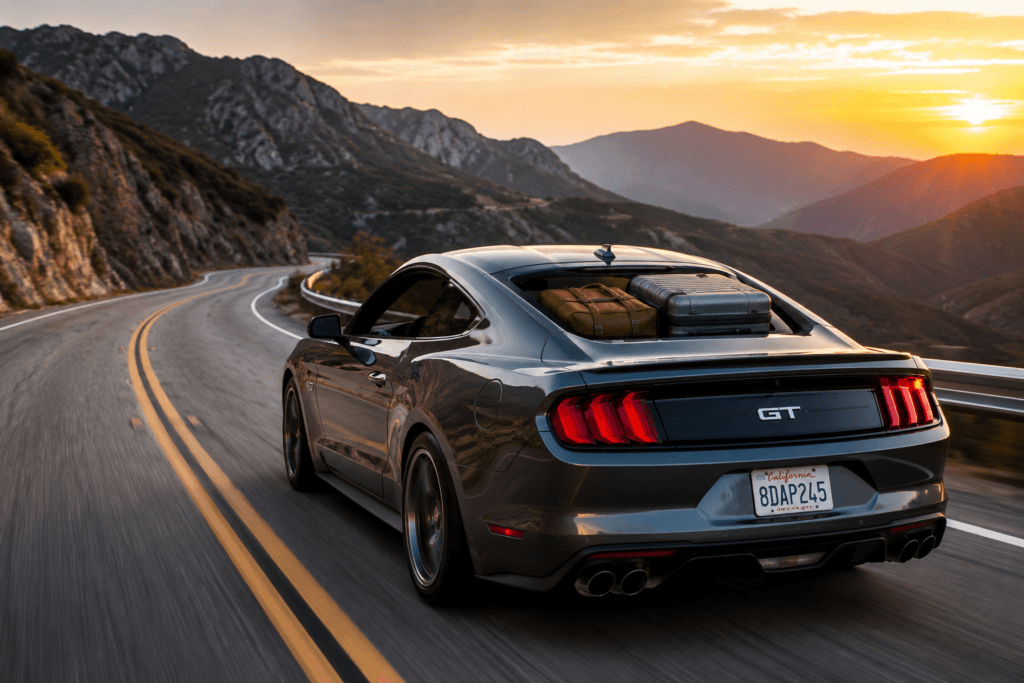
An American sports car can be much more than a weekend toy or a machine reserved for short bursts of acceleration. With the right planning, a Mustang, Corvette, Camaro, or another American performance car can become an excellent companion for a memorable road trip. The combination of power, distinctive styling, responsive handling, and open-road character makes these vehicles particularly appealing when the destination is only part of the experience.
A successful sports car road trip, however, requires more planning than simply choosing a destination and filling the tank. Route selection, road conditions, luggage space, fuel stops, weather, comfort, and driving time can all influence how enjoyable the trip becomes. A route that looks exciting on a map may not be the best choice if it creates unnecessary traffic, limited stopping opportunities, or difficult conditions for a low sports car.
The goal should be to create a trip where the car is enjoyable without allowing the logistics to overshadow the driving experience. A well-planned route can combine scenic highways, interesting towns, good restaurants, comfortable overnight stops, and stretches of road where the vehicle can be enjoyed responsibly and legally.
Road-trip appeal is becoming increasingly relevant to performance cars because today’s vehicles are expected to combine performance with real-world usability. Current automotive testing increasingly evaluates performance cars on both closed circuits and public roads, emphasizing that modern performance vehicles are not necessarily designed only for the racetrack. Modern American Sports Cars That Rival European Supercars explores this broader evolution of American performance.
Choose the Right Road Trip Destination
 The first step is choosing a destination that matches the type of driving experience you want. A coastal trip may offer sweeping ocean views and winding roads, while a mountain route can provide elevation changes, curves, and dramatic scenery. Desert highways offer a completely different experience, with long stretches of open pavement and wide landscapes.
For a sports car enthusiast, the best destination is not necessarily the one with the shortest travel time. The route itself can become part of the trip. Instead of treating the highway as a necessary connection between two locations, consider whether the journey offers interesting roads, scenic viewpoints, historic communities, or automotive attractions.
That does not mean choosing the most difficult road available. A good sports car route should be enjoyable without becoming unnecessarily exhausting. Roads with constant tight corners can be exciting for a short period but tiring over several hours. A mixture of flowing curves, scenic sections, open highway, and comfortable stopping points often produces a better overall experience.
Choosing the Right Route
Route planning is particularly important when traveling in a low, wide, or performance-oriented sports car. Before leaving, review the route and consider road quality, construction, traffic patterns, elevation changes, weather conditions, and available services.
Navigation technology makes it easier to build a route around specific preferences. A driver can identify scenic highways, avoid major traffic corridors when practical, and locate fuel stations or rest areas before entering remote sections. Downloading offline maps can also be useful in areas where cellular coverage may be limited.
It is also worth building flexibility into the itinerary. A road trip should not become stressful because a driver has to reach a particular destination at an exact time. Allowing extra time creates opportunities to stop for photographs, explore a small town, enjoy a meal, or simply take a break.
Pack for the Car You Actually Drive
Luggage planning can be surprisingly important when traveling in an American sports car. Some performance coupes provide useful storage, while others prioritize low weight and aerodynamic design over cargo capacity. Before packing, determine how much usable space the vehicle actually has rather than assuming that everything will fit.
Soft-sided luggage can make better use of irregular storage areas than large rigid suitcases. Packing fewer items can also make the trip more comfortable. A road trip does not require bringing everything from home. Clothing, toiletries, charging cables, medications, sunglasses, and basic travel supplies are usually enough for a short performance-focused getaway.
Owners should also think about how luggage is secured. Loose objects can move around during hard braking or cornering. Keeping the cargo area organized helps prevent damage and reduces distractions during the drive.
Plan Fuel, Charging, and Rest Stops
Fuel planning is one of the simplest ways to make a sports car road trip more enjoyable. Performance cars can have different fuel requirements and driving ranges depending on the model, engine, traffic, terrain, and driving style. Before setting out, identify fuel stations along the route instead of waiting until the fuel gauge becomes a concern.
Drivers should also remember that fuel availability can change significantly between urban areas and remote highways. A station that appears on a map may have limited operating hours or services. Planning ahead provides a useful margin and reduces unnecessary stress.
Rest stops are just as important as fuel stops. Long-distance driving can become tiring even when the car itself is comfortable. Taking regular breaks allows drivers to stretch, hydrate, check the vehicle, and reset their attention before continuing.
For drivers using electrified performance vehicles, charging stops should be planned with similar care. Charging availability, charging speed, route distance, and backup options can all affect travel time. The growing number of hybrid and electric performance vehicles means road-trip planning is becoming increasingly important across the performance-car market.
Check the Car Before Leaving
 A road trip is not the time to discover that a tire is underinflated or a warning light has been ignored for weeks. Before departure, perform a basic inspection of the vehicle. Check tire pressures, fluid levels, lights, windshield condition, wipers, and visible signs of leaks or damage.
It is also smart to inspect the tires for uneven wear or insufficient tread. Tires are particularly important on a performance car because they influence acceleration, braking, steering response, and overall stability. Any questionable tire condition should be addressed before beginning a long journey.
The same principle applies to brakes. If the brake pedal feels unusual, the vehicle produces unexpected brake noise, or the brakes have recently shown signs of reduced performance, the issue should be investigated before departure.
For more detailed ownership guidance, read How to Maintain an American Sports Car for Long-Term Performance.
Make Comfort Part of the Performance Experience
Performance does not have to mean sacrificing comfort. A road trip can involve several hours behind the wheel, so seating position, climate control, visibility, and cabin ergonomics matter.
Before leaving, adjust the driver’s seat and steering wheel so that the controls are easy to reach without compromising visibility. Make sure navigation information can be viewed without creating unnecessary distraction. If the vehicle has multiple drive modes, understand what each setting does before entering unfamiliar roads.
Comfort also means avoiding an overly aggressive itinerary. Driving several hundred miles in a single day can be enjoyable, but adding too many destinations can turn a relaxing trip into a race against the clock. A slower schedule often creates a better opportunity to appreciate both the vehicle and the places along the route.
Enjoy Performance Responsibly
One of the biggest attractions of an American sports car road trip is the opportunity to experience the vehicle on interesting roads. However, public roads are not racetracks. Curves, elevation changes, traffic, pedestrians, cyclists, wildlife, and unexpected road conditions can appear without warning.
The best way to enjoy a performance car on public roads is to stay within posted speed limits and leave enough margin for changing conditions. Drivers can still appreciate steering response, engine sound, braking feel, and the character of the car without treating public roads as competition venues.
For drivers who want to explore the limits of a vehicle, a properly organized track day provides a controlled environment designed for performance driving. Our guide on How to Build the Perfect Track Day American Sports Car covers the preparation involved in taking a performance vehicle to a circuit.
Use Weather and Road Conditions to Your Advantage
Weather can completely change a sports car road trip. Rain can reduce traction, strong winds can affect high-profile vehicles, and extreme temperatures can place additional demands on tires and cooling systems. Before departure, check the forecast along the entire route rather than relying only on conditions at the starting point.
Mountain roads deserve particular attention because conditions can change rapidly with elevation. A clear morning in a valley does not guarantee clear conditions at a higher elevation later in the day.
If conditions become unsafe, changing the itinerary is usually the smarter decision. A great road will still be there another day, while poor weather can quickly turn an enjoyable drive into a stressful experience.
Build Stops Around the Experience
The best American sports car road trips are not simply about reaching a destination. They create a collection of experiences along the way. A scenic overlook, historic downtown, local restaurant, automotive museum, or interesting roadside attraction can give the trip additional character.
Owners can also research automotive events or enthusiast gatherings that happen along their route. Car shows, cruise nights, motorsport events, and automotive museums can turn an ordinary drive into a much more memorable trip.
This approach fits naturally with the culture surrounding American performance cars. These vehicles have always represented more than transportation. They are connected to design, engineering, motorsports, customization, and enthusiast communities. SEMA’s 2026 market research also points to continued strength in the specialty sports-car aftermarket, with a significant share of sports-car owners modifying their vehicles. :contentReference[oaicite:2]{index=2}
Document the Road Trip
Photography and video can become part of the experience. Scenic roads provide natural opportunities to photograph an American sports car against mountains, coastlines, deserts, forests, and historic architecture.
However, photographs should be taken only when the vehicle is safely parked. Pulling over in unsafe locations simply to capture a particular angle can create unnecessary risks. Scenic overlooks, designated parking areas, visitor centers, and other safe locations provide much better opportunities.
Keep the Journey Flexible
A detailed itinerary is useful, but leaving room for unexpected discoveries can make a road trip more memorable. A recommended route may reveal a beautiful viewpoint, an interesting small town, or a local attraction that was never part of the original plan.
The ability to change plans is one of the advantages of traveling by car. Instead of rushing from one destination to another, drivers can adjust the schedule according to weather, traffic, energy levels, and personal interests.
Why American Sports Cars Are Made for the Open Road
American sports cars have evolved considerably. Today’s performance vehicles can combine extraordinary acceleration and handling with technology, comfort, and everyday usability. Recent performance testing increasingly demonstrates this dual personality, with modern cars being evaluated both on tracks and on scenic public-road routes. :contentReference[oaicite:3]{index=3}
That makes the road trip an ideal way to experience an American sports car. The vehicle does not need to be driven at its limits to be entertaining. The sound of the engine, the response of the steering, the feel of the road, and the scenery outside the windshield can all contribute to the experience.
Whether the trip involves a few hundred miles along the coast or a multi-day journey through mountain roads, careful planning allows the driver to focus on the experience rather than the logistics. The right destination, sensible route, proper preparation, and realistic schedule can transform an ordinary drive into a memorable adventure.
Ultimately, the perfect American sports car road trip is not about covering the most miles or reaching the highest speed. It is about finding roads worth driving, places worth stopping, and enough time to enjoy the car along the way. With thoughtful preparation and responsible driving, an American sports car can be just as rewarding on a scenic road trip as it is at a car show, weekend gathering, or performance event.
For more insight into the broader world of American performance vehicles, explore Why American Sports Cars Continue to Dominate Performance Culture.
Before any long-distance journey, drivers can also review vehicle safety information from the National Highway Traffic Safety Administration and use current road and travel information to make responsible decisions about their route.