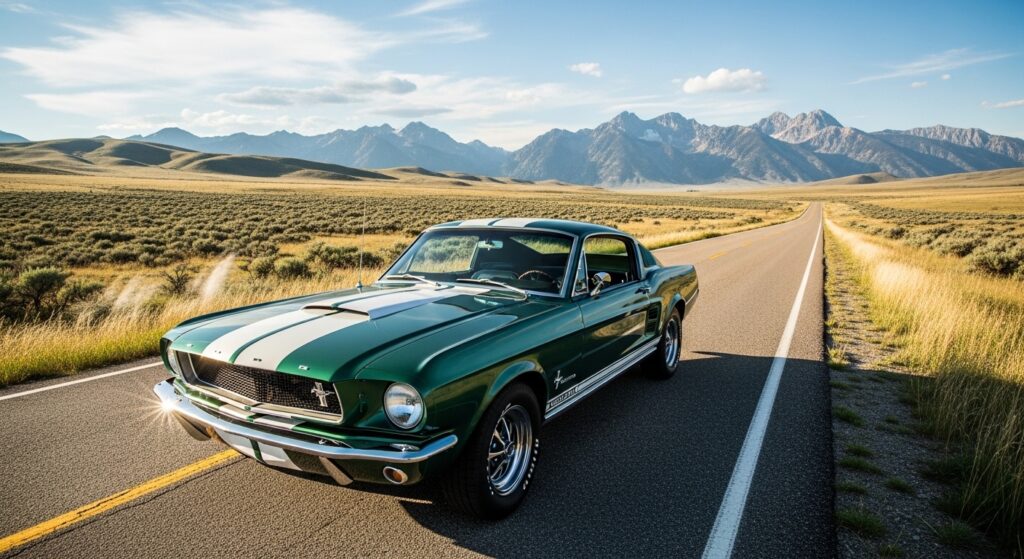
The Ford Mustang has been a symbol of American muscle since its inception in 1964. Known for its aggressive stance, powerful engines, and timeless design, the Mustang has remained a top contender in the automotive world. But just how has the Mustang evolved over the years? In this article, we take a closer look at the design changes that have shaped the Mustang into the icon it is today.
The Birth of the Mustang: A 1960s Revolution
 The Ford Mustang made its debut at the 1964 New York World’s Fair, and it immediately captured the hearts of American car enthusiasts. With its long hood, short rear deck, and aggressive lines, the Mustang’s design was unlike anything on the market at the time. It was sleek, sporty, and ready for the road. Designed by Lee Iacocca and his team, the Mustang was a revolutionary move for Ford, combining performance and style in a way no other car had done before.
The original Mustang was offered in both coupe and convertible options and featured a range of engines, from the base six-cylinder to the more powerful V8. The design was simple yet elegant, with clean lines and a fastback roofline that was both aerodynamic and visually appealing. This new car became an instant hit, attracting not only car enthusiasts but also a younger demographic looking for a stylish yet affordable sports car.
For more about the history of Ford and their other models, check out Ford’s official website.
The Muscle Car Era: 1970s Mustang
The Mustang continued to evolve throughout the 1970s, reflecting the growing demands for larger, more powerful cars. By this time, the Mustang had firmly cemented itself as a classic American muscle car. The design became more muscular, with wider grilles, more aggressive wheel arches, and a more prominent front end. The body became larger and bulkier, which reflected the tastes of the era’s buyers, who were seeking even more horsepower and a bolder look.
In the early 1970s, the Mustang grew in size, with a larger and more imposing stance. Ford introduced the “Sportsroof” version of the Mustang, which replaced the fastback body style. The sleek lines of the previous models were replaced with a more squared-off design, signaling the shift toward the heavier, more powerful muscle cars of the decade. However, despite these design changes, the Mustang still maintained its distinctive identity, offering a muscular silhouette that was synonymous with American automotive power.
The late 1970s saw the introduction of the Mustang II, a more compact version that was designed to meet fuel efficiency demands during the oil crisis. While the design of the Mustang II was controversial and less sporty compared to its predecessors, it remained popular due to its affordability and efficiency during an era of rising fuel prices.
The Fox Body Era: 1980s Ford Mustang
The 1980s saw a shift in design for the Mustang. Enter the Fox Body Mustang, which became one of the most significant redesigns in the car’s history. While the earlier models had emphasized a more muscular, powerful look, the Fox Body Mustang brought with it a more aerodynamic, sleek design that fit the changing tastes of the 1980s. The sharp, angular lines of the previous models gave way to a more rounded and streamlined design.
Introduced in 1979, the Fox Body Mustang was slightly smaller than previous models but packed in modern features like improved suspension and better aerodynamics. The front end was flatter, with more angular headlights and a less pronounced grille, and the rear end featured a more compact look. The Fox Body was available in coupe, hatchback, and convertible variants, offering buyers more options in terms of styling.
During this era, the Mustang’s design became more performance-oriented. Ford focused on refining the car’s handling capabilities, leading to the introduction of higher-performing versions like the Mustang GT and the iconic 5.0L V8. Despite its smaller size, the Fox Body Mustang retained the essence of the original muscle car while adapting to the changing needs of the market.
The Mustang of the 2000s: Modern Twist, Classic Roots
By the early 2000s, Ford introduced a new, retro-inspired design that paid homage to the Mustang’s classic roots while embracing modern features. The return of round headlights, a wider grille, and a sleek silhouette brought the Mustang’s design full circle, blending nostalgia with cutting-edge technology. This design was a response to the growing desire for a more modern interpretation of the classic American muscle car.
Ford’s 2005 Mustang redesign marked the beginning of a new era. It took heavy inspiration from the 1960s models, with a more prominent front grille, a fastback roofline, and wide, flared wheel arches. The classic “hockey stick” side stripes and the rear “louvered” taillights returned, which quickly became fan favorites. The design struck a balance between retro and contemporary, making it accessible to both long-time Mustang enthusiasts and younger drivers alike.
With the 2005 redesign, Ford also introduced advanced technology, like improved suspension systems, better engine options, and more interior features that made the Mustang both fun to drive and comfortable for everyday use. The 2000s Mustang solidified its place in the modern performance car market while staying true to its heritage.
For more information on the 2005 Mustang and its redesign, check out Car and Driver’s Review of the 2005 Mustang.
The 2024 Ford Mustang: A Bold New Era
 The 2024 Ford Mustang represents the future of muscle cars, fusing iconic design elements with advanced technology. The aggressive front grille, signature fastback roofline, and bold stance are all present, but the Mustang now features innovative updates such as advanced aerodynamics, improved engine efficiency, and a more refined interior. The exterior still proudly showcases its retro styling, but Ford has given it a sleek, modern edge, with sharper lines and more attention to detail.
The 2024 model continues to celebrate Mustang’s long history, while incorporating new technologies like hybrid options and electric powertrains. With advancements in handling and suspension, as well as the addition of smarter tech features like driver-assistance systems, the 2024 Mustang shows that the spirit of the muscle car is far from dead.
The Mustang’s interior design also evolved, combining comfort with performance-oriented features. The 2024 Mustang boasts a more refined cockpit, with upgraded materials and a larger digital display for the driver. Performance enthusiasts will appreciate the improved infotainment system, while those who prefer a classic interior will enjoy the familiar, tactile feel of the Mustang’s steering wheel and pedals. For more details on the new 2024 Mustang, visit Ford’s official Mustang page.
With its blend of tradition and innovation, the Ford Mustang remains a symbol of American performance and style. As the brand moves into new generations, the Mustang continues to honor its legacy while embracing the future of automotive technology. Discover the evolution of American muscle: From Classic Legends to Modern Beasts.